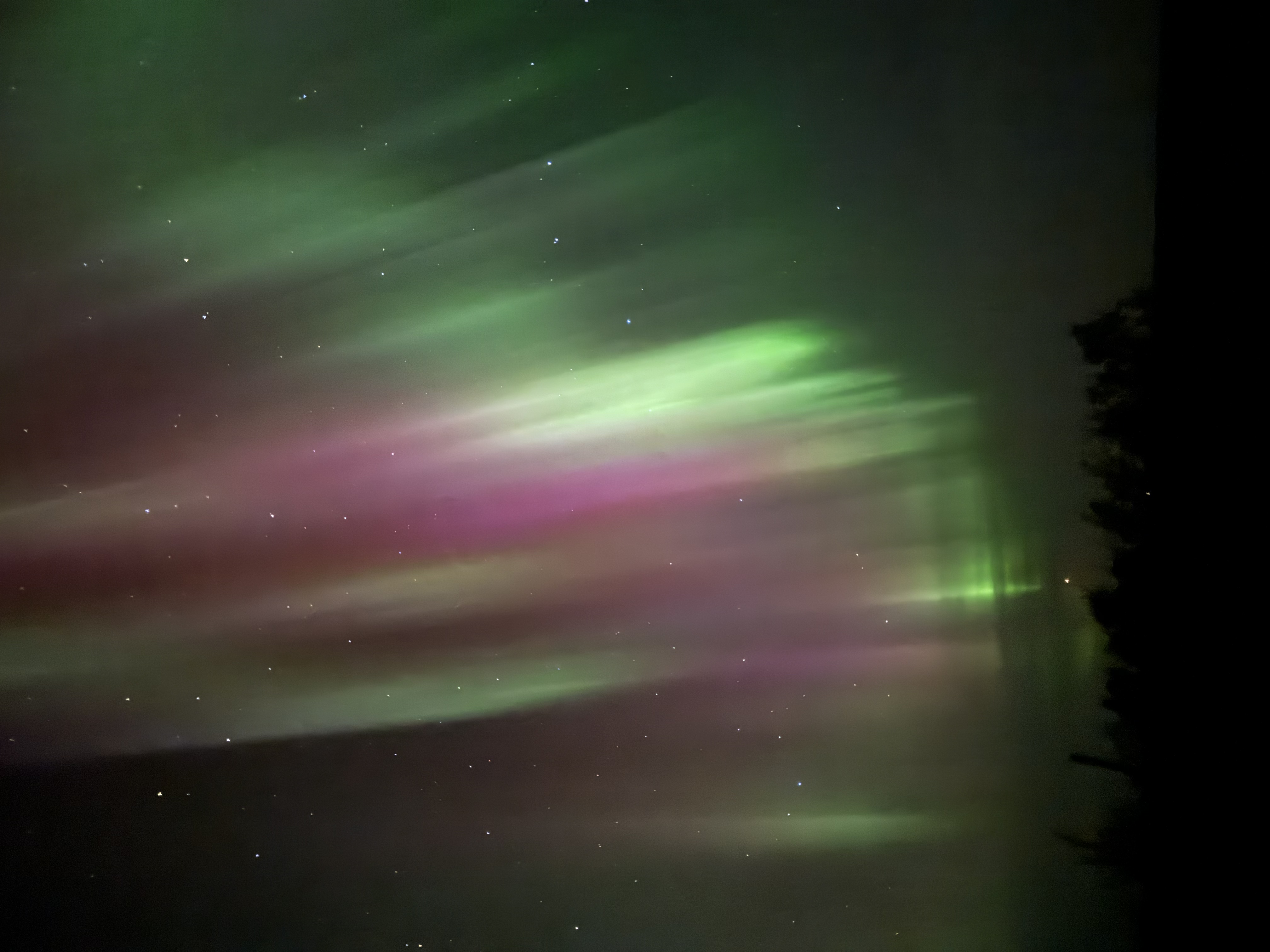
Successful Aurora chasing depends on watching space weather. If you're serious about chasing the aurora, it pays to understand the space weather indicators that forecasters and expert chasers rely on. In Fairbanks—where aurora potential is high almost every night—watching the right data helps determine *when* and *where* to go. Three of the most useful real-time indicators are the **GOES Magnetometer**, **solar wind + Bz readings**, and the **Auroral Electrojet Index (AE Index)**.
GOES Magnetometer The GOES Magnetometer measures magnetic disturbances in geosynchronous orbit. What you’re looking for is **sudden or sustained movement** on the X, Y, or Z axis—especially sharp dips or swings in the magnetic field lines. These are signs of geomagnetic activity building in the near-Earth environment, often within 30–90 minutes of visible aurora. The GOES data is smooth and continuous, making it one of the most real-time and responsive indicators for knowing when a display might begin ramping up. Solar Wind Speed & Bz The solar wind is a stream of charged particles emitted by the sun, and it's the engine behind the aurora. You can track it via the Real-Time Solar Wind dashboard. Two values to watch closely are **speed** and **Bz** (a component of the interplanetary magnetic field). When Bz is **negative (southward)**, it allows solar particles to more easily enter Earth's magnetic field—especially when wind speeds are high (500+ km/s). A sustained negative Bz of -5 nT or lower, combined with fast wind, is often the perfect setup for strong auroras. Auroral Electrojet Index (AE Index) The Auroral Electrojet Index tracks geomagnetic activity in the upper atmosphere, especially over the auroral zone. It measures the intensity of electrical currents flowing in the ionosphere due to auroral activity. When the AE index climbs above **600–800 nT**, it's a sign of strong substorm activity—which often coincides with visible aurora dancing and expanding southward. AE spikes are especially useful when Bz and GOES data are already looking favorable. By watching these three tools together, you can get a highly accurate sense of when the aurora might appear over Fairbanks—or whether it's worth waiting a little longer. For the best results, keep these tabs open during your chase night and be ready to move when the signs align. The lights often appear with little warning, and real-time data is your best friend when timing matters most.