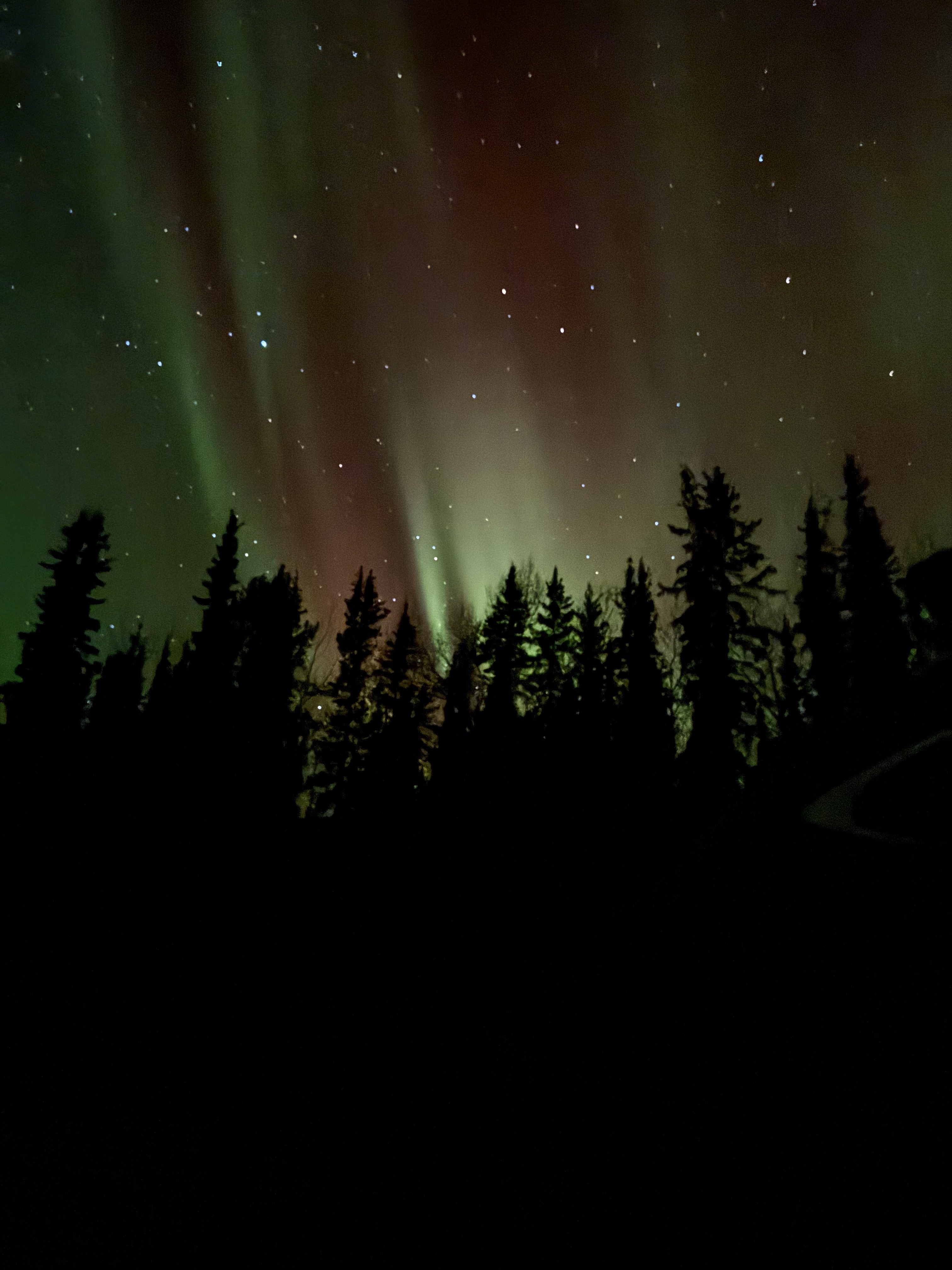
The aurora, also known as the northern and southern lights (aurora borealis and aurora australis), is a stunning natural light display caused by the interaction between charged particles from the sun and Earth's magnetic field. These particles collide with gases in the upper atmosphere, primarily oxygen and nitrogen, producing vibrant hues of green, red, blue, and purple. The most common color, a bright green, is the result of oxygen molecules being excited at altitudes of around 100 to 300 kilometers (60 to 190 miles). Red auroras, which are rarer, occur at even higher altitudes, up to 400 kilometers (250 miles), where oxygen atoms are more sparse.
Auroras typically form in an oval-shaped band around Earth's magnetic poles, known as the auroral oval. During a substorm—a sudden increase in geomagnetic activity—the auroral oval expands, allowing the lights to be seen at lower latitudes than usual. A typical auroral substorm can last between one and three hours, with the most intense displays occurring in the first 30 minutes. The height of the aurora plays a key role in its visibility; since it occurs so high in the atmosphere, it can sometimes be seen from hundreds of kilometers away under optimal conditions. The view radius of an auroral substorm depends on its intensity and altitude. A moderately strong aurora might be visible up to 1,000 kilometers (620 miles) from its source, while an extremely bright display could be seen even farther. For example, during a powerful geomagnetic storm, auroras have been spotted as far south as the southern United States or central Europe. However, light pollution, weather conditions, and the curvature of the Earth can limit visibility. The best views are usually in high-latitude regions like Scandinavia, Canada, and Alaska, where the auroral oval is most active. The structure of an auroral substorm often follows a predictable pattern. It begins with a quiet arc that brightens suddenly, followed by rapid movement and swirling patterns as the substorm intensifies. At its peak, the aurora can stretch across vast portions of the sky, with rays, curtains, and coronas forming as magnetic field lines twist and reconnect. The altitude of these structures varies—lower-altitude auroras (around 100 km) appear sharper and more defined, while higher-altitude auroras (above 250 km) appear more diffuse and spread out. In summary, auroras are a mesmerizing phenomenon occurring between 100 and 400 kilometers above Earth, with visibility extending hundreds or even thousands of kilometers during substorms. Their appearance depends on solar activity, atmospheric conditions, and geomagnetic forces, making each display unique. Whether observed from the Arctic tundra or, on rare occasions, from more temperate regions, the aurora remains one of nature’s most awe-inspiring wonders.