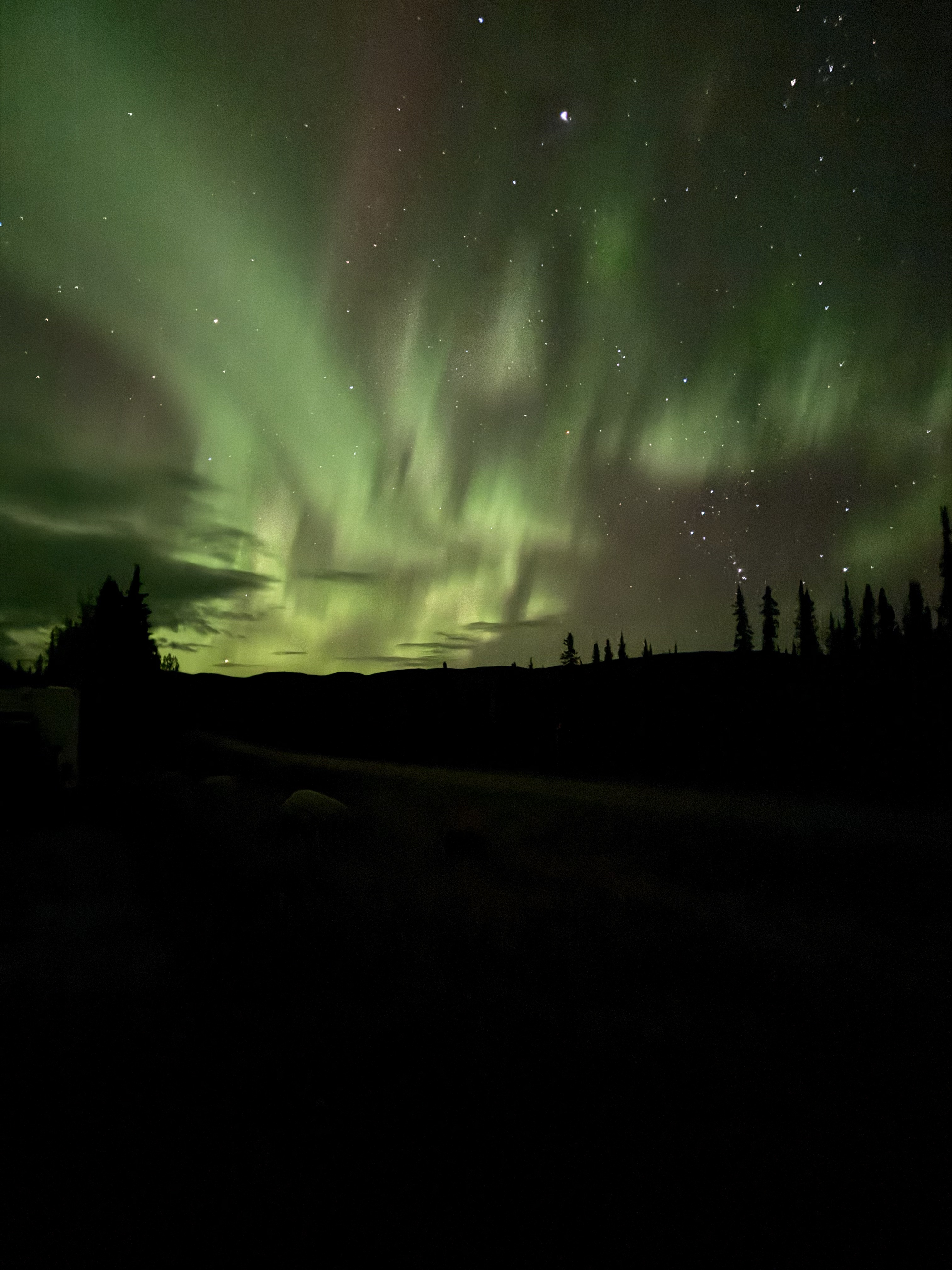
Magnetic midnight is the time each night when your position on Earth is directly aligned with the “midnight side” of the planet’s magnetic field. Unlike regular midnight, which is based on your time zone and the position of the Sun relative to geographic longitude, magnetic midnight is tied to Earth’s magnetic poles. Because the magnetic poles are tilted and offset from the geographic poles, magnetic midnight often occurs at a different clock time — sometimes earlier or later than what your watch says is midnight.
This matters for aurora viewing because the aurora is powered by charged particles from the Sun that stream along Earth’s magnetic field lines into the atmosphere. At magnetic midnight, your location is best positioned to connect with the part of the magnetosphere where those particles flow most directly toward Earth. This alignment increases the likelihood of seeing brighter, more active auroras, especially when space weather conditions are favorable. For Fairbanks, Alaska, magnetic midnight typically happens between about 11:30 PM and 2:30 AM local time, depending on the season and exact definition used. On nights with strong auroral activity, displays often intensify around this time, sometimes peaking in the hour before and after magnetic midnight. That’s why seasoned aurora chasers plan their outings to span this window — it’s when nature’s light show has the best odds of putting on its most dazzling performance. Knowing the exact time of magnetic midnight for a given night lets you target your viewing session for maximum payoff. If you’re visiting Fairbanks during aurora season, keeping an eye on both space weather forecasts and magnetic midnight timing can make the difference between catching a faint glow and witnessing a sky filled with vivid, dancing colors. It’s not a guarantee — the aurora can appear at any time of night — but it’s one of the most important timing tools for serious northern lights hunting.